
Drainage renovation – 10 most important questions
Drainage renovation – 10 most important questions
Drainage systems play a key role in keeping a building’s foundations dry. If the soil around a structure cannot dry properly, moisture can cause serious damage to foundations and structural elements.
Poorly functioning drainage systems can lead to severe issues such as moisture damage and mould growth, which may weaken the building’s structure and compromise indoor air quality.
In this article, we answer the most important questions about drainage renovation. We help you understand the key principles of drainage renovation and explain what its implementation involves in practice.
Key takeaways from the article
– Drainage renovation refers to the renewal or repair of a building’s drainage system.
– Signs of drainage problems include a musty smell in the basement, damage in walls or foundations, and water accumulation in the yard.
– The cost of drainage renovation is typically around 14,000–22,000 euros.
– Drainage renovation usually takes one to two weeks, depending on the property.
– Drainage renovation can be done as a DIY project, but it is only advisable if you have the necessary knowledge, experience, and equipment.
What is a drainage renovation?
A drainage renovation refers to the renewal or repair of a building’s subsurface drainage system, ensuring that soil moisture is properly directed away from the foundations and prevented from entering the structure. If the foundation and plinth are continuously exposed to moisture, damage will eventually occur. A properly executed drainage system maintains the dryness of the foundation and ensures that rainwater and meltwater are directed to the correct location. Drainage renovation helps prevent the most common moisture and mould damage in subfloor structures.
Drainage systems became more common in the 1970s and were made mandatory in the 1980s, but it was only in the 2000s that their importance to building health was fully understood.
What is done during a drainage renovation?
A drainage renovation ensures that the building’s drainage system functions effectively and directs water away from the structure. At Salaojapiste, every project begins with careful planning together with the client.
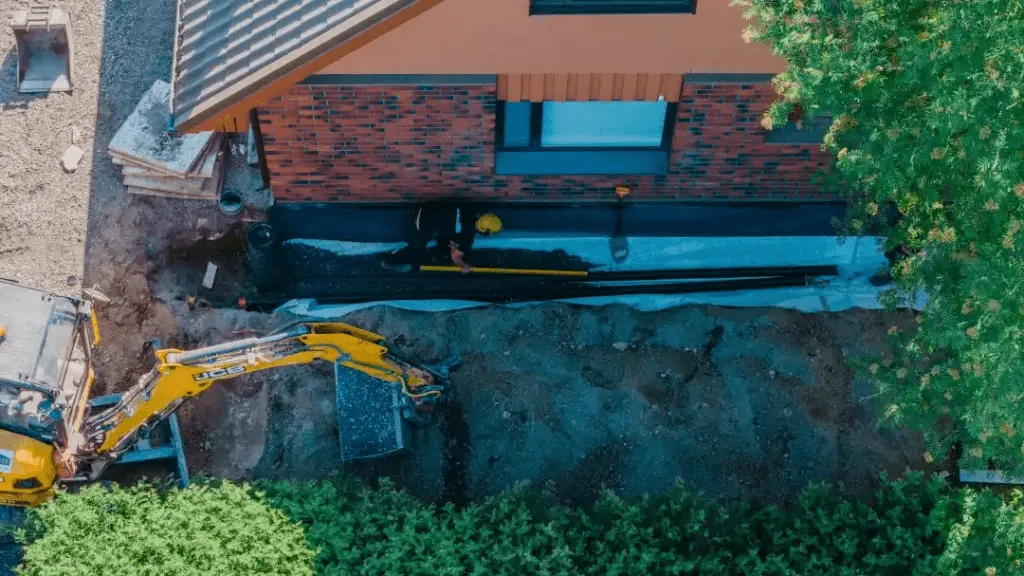
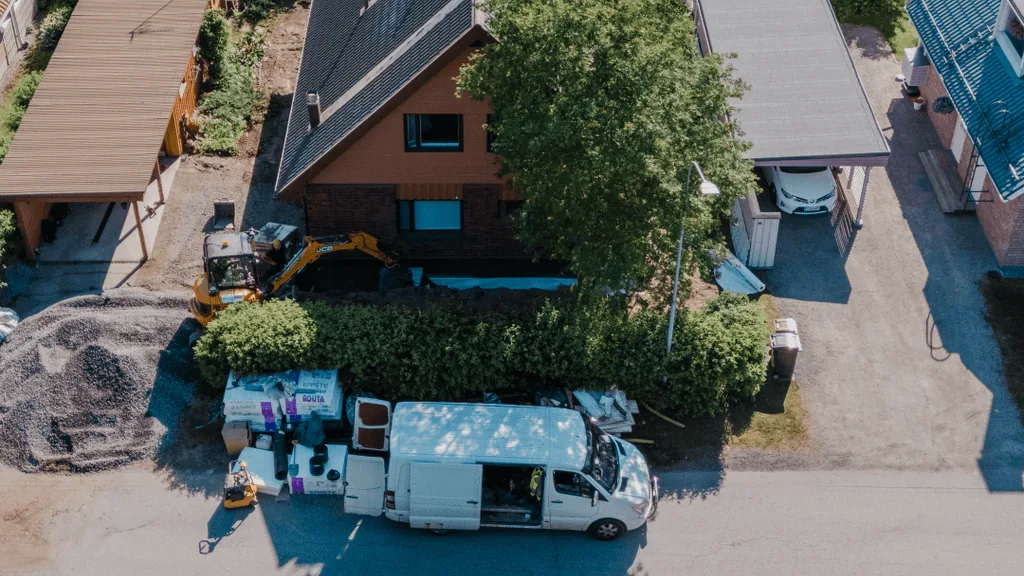
The renovation itself starts with excavation work, where soil is removed around the building to access the old drainage system. New drainage pipes are installed below the foundation level, and at the same time the plinth is cleaned and any necessary repairs are carried out. A filter fabric is placed at the bottom of the excavation, and a waterproofing membrane is attached to the foundation wall.
Once the pipe system is installed, the excavation is filled with sand and gravel, and insulation is added. Finally, a wooden edge is installed along the wall and the area is filled with permeable gravel. The project is completed with topsoil, grass seeding, and removal of all construction waste, leaving the site clean and finished.
What if the house has no drainage system?
If a house has no drainage system, water can accumulate around the foundations and subfloor. As stated in our drainage article:
“Excess water can penetrate the foundation of the building and lead to structural damage and increased moisture and mould growth, which can be harmful to health.”
Many homeowners also wonder whether drainage systems are mandatory. In Finland, drainage requirements for residential plots were established in 1999.
Milloin salaojaremontti kannattaa tehdä?
Kuulemme usein kysyttävän, milloin salaojat pitää uusia. Tyypillisimpiä syitä salaojaremonttiin ovat kosteusongelmat. Salaojaremontti kannattaa tehdä heti, mikäli vesi alkaa toistuvasti kertymään talon ympärille, kellarissa esiintyy homeen hajua tai perustuksissa ilmenee vaurioita. Nämä kertovat usein salaojien ongelmista ja uusimisen tarpeesta.
Rakennuksen ympäristöä ja sen kosteutta kannattaa pitää tarkasti silmällä, sillä salaojaremontin tarve saatetaan usein huomata vasta siinä vaiheessa, kuin talon rungon alajuoksu on jo homeessa.
Mistä tietää, että salaojat eivät toimi?
Salaojien toimimattomuuden voi havaita, jos kellarissa tai alapohjassa on kosteutta tai homeen hajua, pihalle kertyy seisovaa vettä, sokkelissa on vaurioita, lattia on epätasainen tai kellarissa on vesivahinkoja. Craig Tripp toteaa hyvin artikkelissaan:
“Liiallinen kosteus alapohjassa voi johtaa vakaviin ongelmiin, kuten homeen ja sienikasvuston muodostumiseen sekä puuvaurioihin. Tämä voi heikentää lattiarakenteita, aiheuttaen niiden epätasaisuutta, pehmenemistä tai joustavuutta.”
Lisäksi, jos sade- tai sulamisvedet kerääntyvät sokkelin ympärille ja nousevat poikkeuksellisen korkealle, se viittaa usein salaojien tukkeutumiseen tai heikkoon toimintaan. Tällöin vesi ei pääse poistumaan tarpeeksi tehokkaasti, mikä edellyttää salaojien pikaisen tarkastuksen ja mahdollisen korjauksen.
Voiko salaojaremontin tehdä itse?
Salaojaremontin voi teoriassa tehdä itse, mutta se on vaativa ja aikaa vievä projekti, joka edellyttää oikeanlaista osaamista, kokemusta ja välineistöä. Käytännössä voisimme sanoa, että salaojaremontti on kannattavaa tehdä itse vain silloin, jos on valmis uhraamaan siihen esimerkiksi kesän kaiken vapaa-ajan, eikä omalle työlle lasketa lainkaan hintaa. Useimmat meistä haluavat kuitenkin keskittyä siihen, mitä parhaiten osaa, joten ammattilaisen palkkaaminen on lähes aina kannattavampi vaihtoehto.
Vaikka tee-se-itse-remontti voi tuntua kustannustehokkaalta ratkaisulta, ammattilaisen apuun turvautuminen varmistaa, että työ tehdään varmasti oikein ja kestävällä tavalla. Virheellisesti tehty salaojitus voi johtaa vakaviin kosteusongelmiin, joiden korjaaminen voi tulla ajan myötä kalliiksi.
When is it worth doing a drainage renovation?
We are often asked when drainage systems should be replaced. The most common reasons for drainage renovation are moisture-related problems. A drainage renovation should be carried out immediately if water repeatedly accumulates around the building, if a musty smell appears in the basement, or if damage is visible in the foundations. These are often signs of drainage failure and indicate that replacement is needed.
The condition of the building’s surroundings and moisture levels should be monitored carefully, as the need for drainage renovation is often only noticed when the lower structural frame of the house has already suffered mould damage.
How can you tell if drainage is not working?
Signs of a failing drainage system include moisture or mould odours in the basement or subfloor, standing water in the yard, damage to the foundation, uneven flooring, or water damage in basement areas. As Craig Tripp states:
“Excess moisture in subfloor areas can lead to serious problems such as mould and fungal growth as well as wood damage. This can weaken floor structures, causing them to become uneven, soft, or flexible.”
In addition, if rainwater or meltwater accumulates around the foundation and rises unusually high, it often indicates that the drainage system is clogged or not functioning properly. In such cases, the system should be inspected and repaired as soon as possible.
Can drainage renovation be done by yourself?
In theory, drainage renovation can be done as a DIY project, but it is a demanding and time-consuming job that requires proper knowledge, experience, and equipment. In practice, it is only reasonable to do it yourself if you are willing to dedicate a full summer to it and do not assign any value to your own working time.
While DIY may seem cost-effective, hiring professionals is almost always the better option. It ensures the work is done correctly and with long-term durability. Poorly executed drainage work can lead to serious moisture problems that become significantly more expensive to fix later on.

How long does a drainage renovation take?
In general, a drainage renovation takes 4–8 days. The duration depends on several factors such as the size of the building, soil conditions, possible obstacles, and the overall scope of the work. In smaller and simpler projects, the renovation can be completed more quickly, while larger or more complex sites often require more time.
Can drainage renovation be done in winter?
Drainage renovation can be carried out in winter, but winter conditions introduce significant challenges to the work.
Cold weather, frozen ground, and snow make excavation and installation more difficult. As a result, winter drainage renovation often requires special equipment such as ground thawing systems and heavier machinery. Naturally, the more difficult the working conditions, the longer the project takes and the higher the overall cost becomes.
You can read more about this topic here.
Lähteet
SALAOJAREMONTTI TALVELLA – ONKO SE MAHDOLLISTA?
What Is Drainage? How To Install Drainage?
How Much Do Drainage Systems Cost?
Can I Fix Poor Drainage Around My Home’s Foundation? 6 Steps to Take