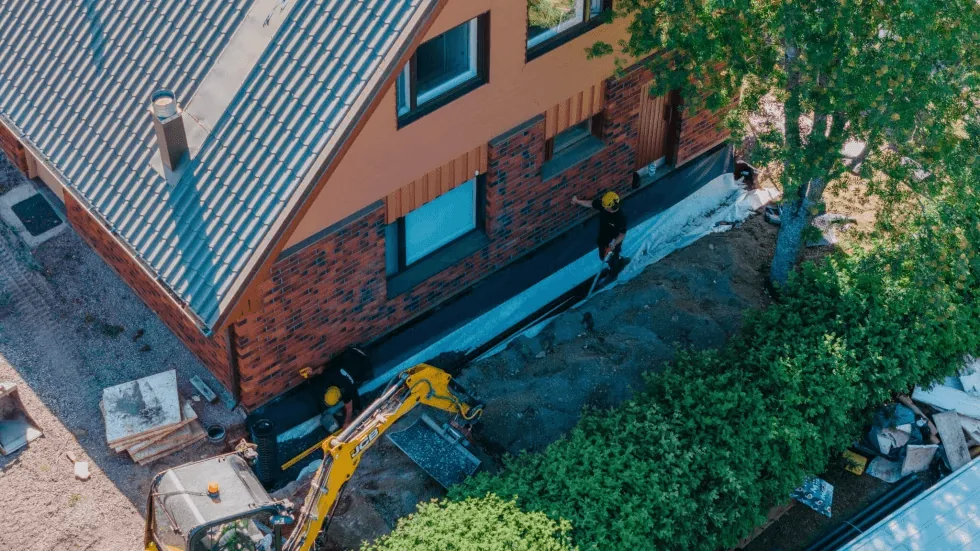
Foundation membrane installation – how to avoid costly mistakes
Installation of a waterproofing membrane – how to avoid costly mistakes
Installing a waterproofing membrane is an important measure for protecting a building’s foundations from moisture-related damage. Although the process may seem simple, it involves several critical details that must be carefully considered to avoid costly mistakes.
In this article, we go through the basics of waterproofing membrane installation and explain why it is essential for the long-term durability of a building. We also provide tips on how to avoid common and expensive installation errors. If you are planning to install a waterproofing membrane, this article gives you all the essential information for a successful installation.
Installation of a drainage membrane – summarized
A drainage membrane protects foundations, plinths, and other building structures from moisture-related damage
It directs rainwater and excess moisture away from the building through the drainage system
The membrane is always installed against the foundation wall, so installation depth depends on the depth of the building’s foundations
The membrane is installed with the studded side facing the foundation wall
For a detached house, installation typically costs around 2,000 – 10,000 euros
Is a drainage membrane necessary?
A drainage membrane protects building structures from moisture. It acts as a moisture barrier and prevents water from entering the structure, improving durability and extending the building’s lifespan. As Paul Lawiess summarizes in his article: “Installing a moisture-resistant drainage membrane is very important, as it prevents underground moisture from rising and being absorbed into wall structures.”
The membrane is installed in areas where structures are exposed to moisture, such as foundations. Its use is especially important in areas with high groundwater levels or soil that retains moisture. It protects foundations, plinths, and other structures from moisture damage, reducing the risk of mould and rot.
When is a drainage membrane needed?
A drainage membrane reduces moisture around foundations and directs rainwater and excess moisture away through the drainage system. It is especially important in areas with high groundwater levels or poorly draining soil. Its use helps prevent moisture damage and is recommended in all cases where there is a risk of ground moisture affecting structures.
Its importance increases if drainage systems fail and water begins to accumulate around the foundation. The membrane is particularly recommended during drainage renovation projects, as well as in older houses where basements, subfloors, or below-ground walls have previously suffered from moisture problems.
How is a drainage membrane attached?
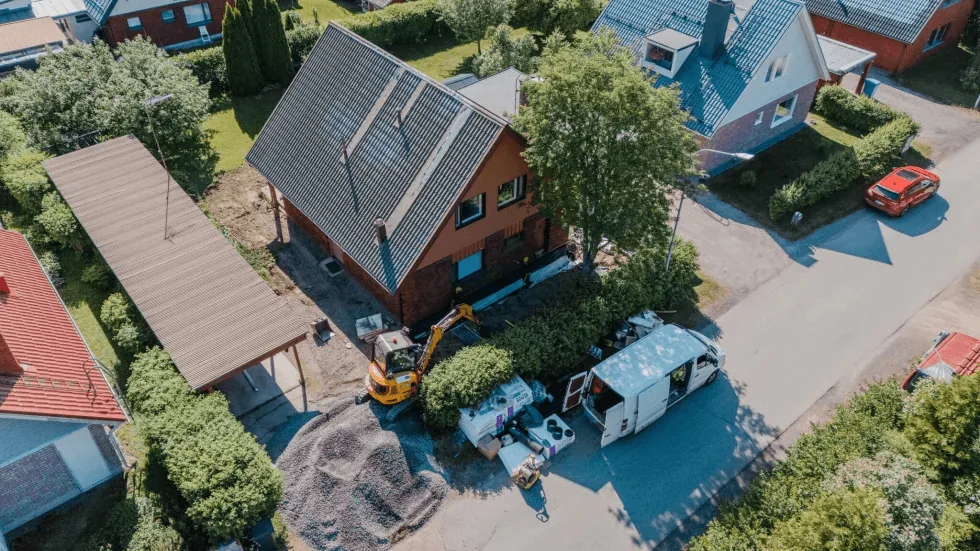
We are often asked how and with what a drainage membrane should be fixed. The membrane is usually attached to the foundation wall with nails or screws. The fastening method depends on the chosen material and installation conditions. The membrane is installed along the foundation wall so that the studded side faces the wall.
The membrane is nailed or screwed into the wall approximately every 30–40 cm. Fixing is done along the upper edge of the membrane to keep it securely in place. Finally, it is important to ensure that the membrane is installed straight and tightly against the foundation wall. However, it should not be tightened excessively, as this may damage the material.
Which way should the drainage membrane be installed?
The membrane is installed against the foundation wall with the studded side facing the wall. This allows moisture from the foundation to collect on the surface of the membrane and drain down toward the drainage system.
The membrane is fixed with nails or screws so that it remains firmly in place. Proper installation ensures that the textured surface prevents water from reaching the foundation and directs it into the drainage system.
How deep should a drainage membrane be installed?
The main purpose of the membrane is to prevent water from entering the building’s foundations, so installation depth is important. The membrane is always installed against the foundation wall, meaning the depth depends on the foundation structure. It is typically installed 10–20 cm below the foundation so that its upper edge ends up about 5 cm below ground level.
In foundations with footings, it is important to extend the membrane over the footing and shape the concrete so that water does not collect on top of it. The upper edge is protected with a finishing strip, which prevents soil from entering between the membrane and the wall. In our projects at Salaojapiste, we use a high-quality metal finishing strip instead of plastic.
How much does drainage membrane installation cost?
In general, installing a drainage membrane for a detached house costs on average about 2,000–10,000 euros. For example, installing a membrane around the foundation of a medium-sized detached house may cost around 7,000 euros, while in terrace house projects the cost can rise up to 25,000 euros.
The price of installation varies depending on factors such as the size of the property, location, and required additional materials.
The best cost estimate for a drainage membrane installation is obtained by contacting us directly.
Can a drainage membrane be installed by yourself?
Installing a drainage membrane is possible as a DIY project, but it requires careful attention and precision. As stated in our article:
“It is important that waterproofing is installed correctly the first time, because incorrect installation can lead to significant repair costs and structural problems. If insulation is installed improperly, the building is left exposed to ground moisture, which can cause serious long-term damage.”
It is therefore important to ensure that the membranes are installed in a way that allows water to drain freely. Although DIY installation is possible, incorrect execution can lead to moisture problems. If you are unsure about your skills, it is advisable to consult an expert or use a professional installer.
What can incorrectly installed drainage membrane cause?
An incorrectly installed drainage membrane can cause serious problems. A correctly installed membrane is an essential part of a building’s moisture protection system, while improper installation can lead to structural damage and significant costs.
If moisture enters the structure, it can cause mould, rot, and other moisture-related damage. Over time, moisture can also affect insulation materials, reducing the building’s thermal performance.
As Timberwise also highlights:
When installing a drainage membrane, it is essential to ensure there are no tears or holes that could allow moisture to enter. If this happens, the membrane loses its effectiveness.”
A faulty installation or damaged membrane may require extensive repairs and full replacement of the system.

Planning drainage membrane installation in an older house?
In older buildings, drainage membranes can deteriorate over time, so it is important to regularly check their condition. If the membranes need replacement, it is often sensible to combine the work with a full drainage renovation. During membrane installation, it is common to carry out a more comprehensive drainage upgrade, including replacing drainage pipes and inspection chambers, as well as updating the stormwater system.
As described in our previous article:
A drainage renovation refers to the renewal or repair of a building’s drainage system, ensuring that soil moisture is directed away from the foundations and preventing water from entering the structure.”
If the existing membranes are worn out or missing entirely, replacing them is recommended to ensure proper moisture protection for the foundation walls. At Salaojapiste, we specialize in drainage renovations and membrane installations. If your home needs new membranes, contact us and we will find the best solution for your property.
Lähteet
Salaojaremontti –10 tärkeintä kysymystä