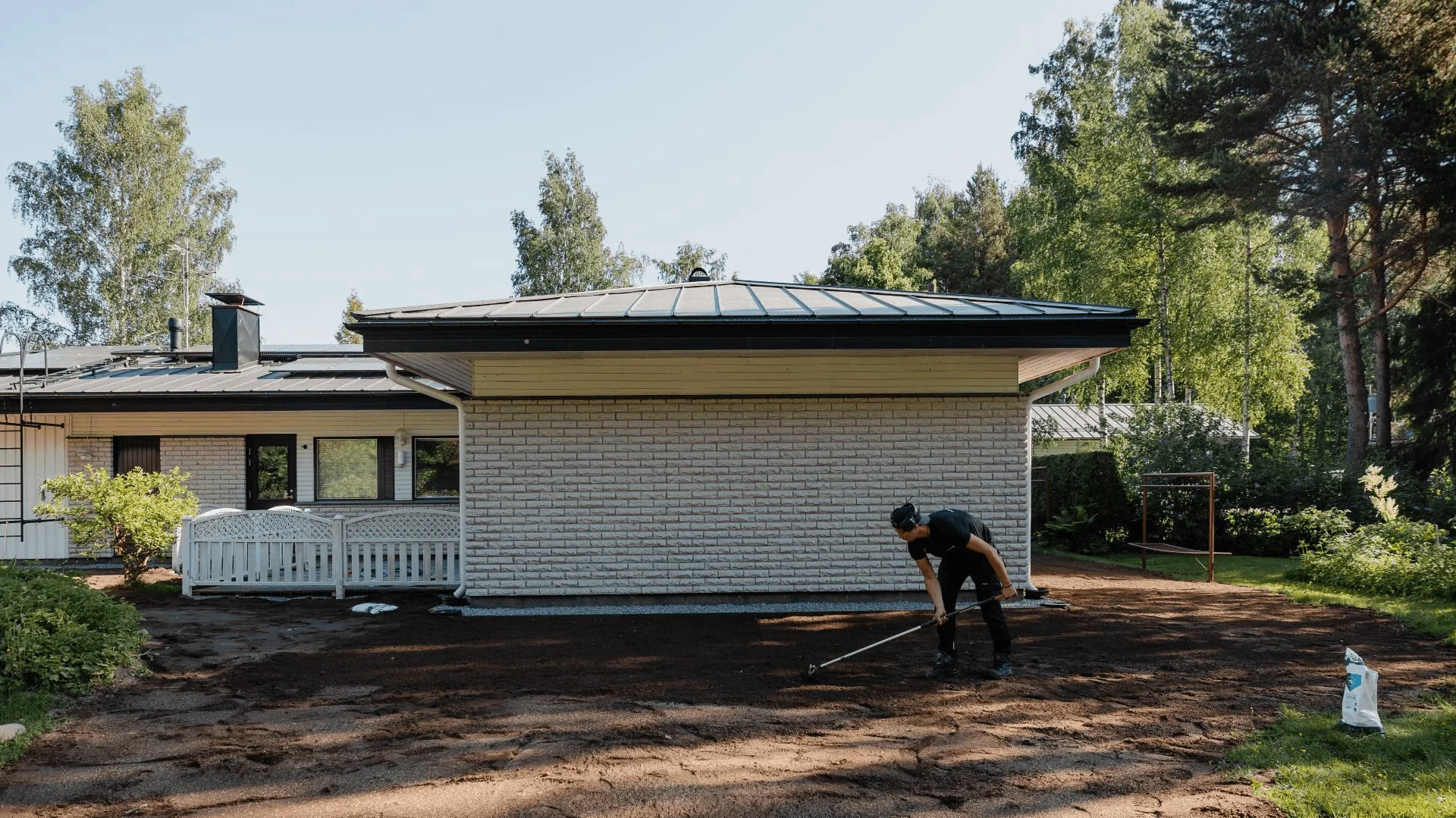
Low plinth and foundation membrane installation – what to consider?
Matala sokkeli (low foundation plinth) and the installation of a foundation drainage board (patolevy) can form a challenging combination, especially in older buildings or when the clearance between the structure and ground level is limited. How should a drainage board be installed in a low plinth so that moisture does not damage the structure?
In this article, we explain what a low plinth means, why it requires special attention, and how a drainage board should be installed correctly even as a retrofit solution. Finally, we go through the most common mistakes to avoid.
Key takeaways from the article
Low plinth structures can resemble valesokkeli constructions and therefore require special attention in waterproofing
A drainage board prevents water and moisture from entering the foundation and allows air circulation between layers
Installing a drainage board in a low plinth is possible when done using proper methods
A drainage board can also be installed retrospectively, for example during drainage renovation
The most common mistakes are related to installing the drainage board too low and insufficient finishing at the top edge
What is a low plinth?
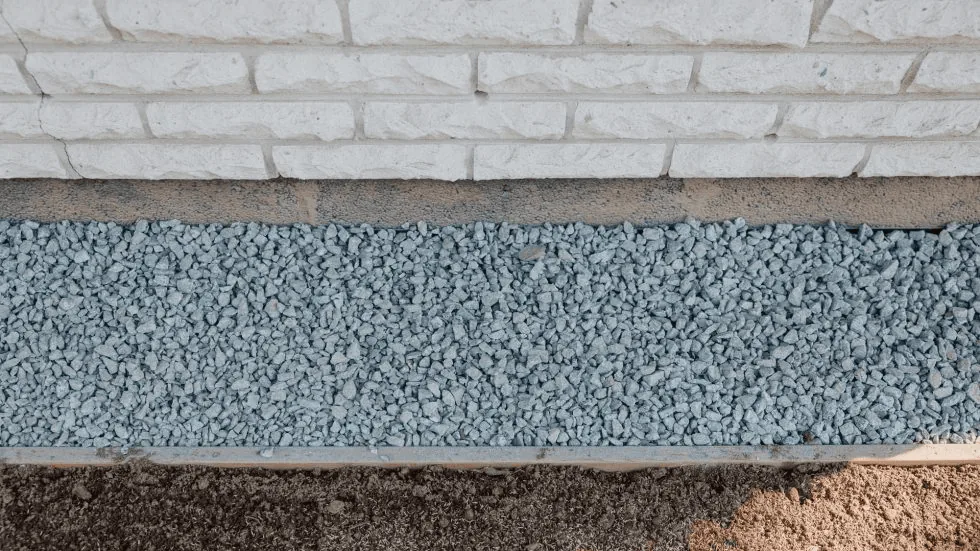
A low plinth refers to a building foundation where the distance between the ground level and the lowest wooden structural elements of the building is less than the recommended 30 centimeters. In such cases, the plinth does not provide sufficient protection against splash water or ground moisture, and it requires special attention in waterproofing and structural protection.
It is important to note that a low plinth is not automatically the same as a so-called valesokkeli, but there can be similarities between the two. A low plinth can involve similar moisture risk factors as valesokkeli structures, especially if wooden structural elements are located close to ground level. As discussed in our article on valesokkeli, the positioning of wooden structures at or near ground level significantly increases moisture risk.
Typical reasons for a low plinth
There are several possible reasons behind a low plinth. Common causes include construction practices at the time of building, when low plinths were a typical solution, especially in post-war detached houses and cottages. In some cases, site elevation differences or strict zoning regulations have led to the design of a low plinth solution. In older buildings, the surrounding ground level may also have risen over time due to landscaping, filling work, or yard renovations, effectively reducing the original clearance between the structure and the ground.
Challenges of a low plinth
The main challenge of a low plinth is moisture management. When the plinth is close to ground level, water and moisture can more easily come into contact with the building’s structural elements. This can lead to damage such as mold problems or rot in structural materials.
According to Baumerk’s experts, moisture can transfer from the soil into the plinth not only through gravity but also by capillary action—meaning it can be drawn upward through porous materials. For this reason, it is essential that foundation waterproofing and the installation of a drainage board (patolevy) are carried out carefully and at the correct height.
Height requirements for a low plinth
Building regulations do not define a strict numerical limit for when a plinth is considered “too low,” but they do require that structures are designed so that both rainwater and capillary moisture cannot enter the building elements.
According to RT guidelines, there should be at least 300 mm (30 cm) of clearance between ground level and the lowest wooden structural element. This helps protect the structure from splash water and ground moisture. In practice, a plinth height of 50–60 cm already provides better protection.
If the plinth is below recommended levels, water management, waterproofing, and drainage board installation must be carried out with extra care.
What is the purpose of a drainage board (patolevy)?
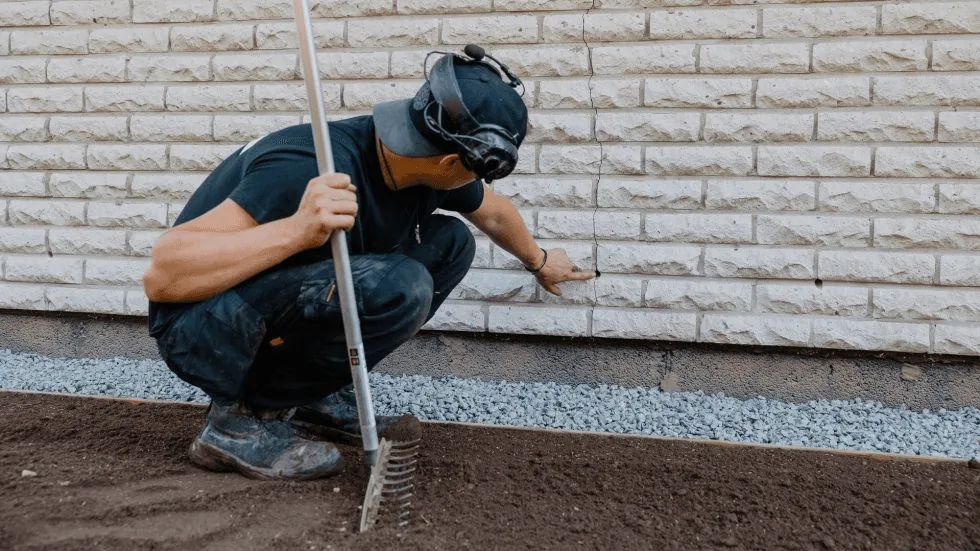
The purpose of a drainage board is to protect the foundation wall from moisture and water. It prevents water from directly reaching the surface of the foundation and allows air to circulate between the foundation and the surrounding soil.
As stated in a Resiston guide:
“The drainage board protects foundations both from water penetration and ground moisture, while also allowing air circulation between the foundation and the backfill layer.”
Why is a drainage board beneficial?
A drainage board is an effective way to protect the foundation from moisture, especially in structures exposed to rainwater or ground moisture. It acts as an additional protective layer over waterproofing and directs moisture away from the foundation. In the long term, it reduces the risk of moisture damage and extends the lifespan of the structure.
As Scott Gibson from Fine Homebuilding summarizes:
“Even if a foundation has been treated with waterproofing, it will not stop water under pressure—this is why drainage boards are used.”
Can a drainage board be installed afterwards?
Yes, installing a drainage board retrospectively is possible, especially during a drainage renovation. In older buildings, a drainage board may be completely missing, and adding one can significantly improve moisture safety.
As stated in our DIY drainage renovation guide, a drainage board can also be installed later, provided that foundation waterproofing and drainage systems are carried out correctly at the same time. This ensures that the drainage board functions effectively and remains a long-term protective layer for the foundation.
How to install a drainage board correctly on a low plinth
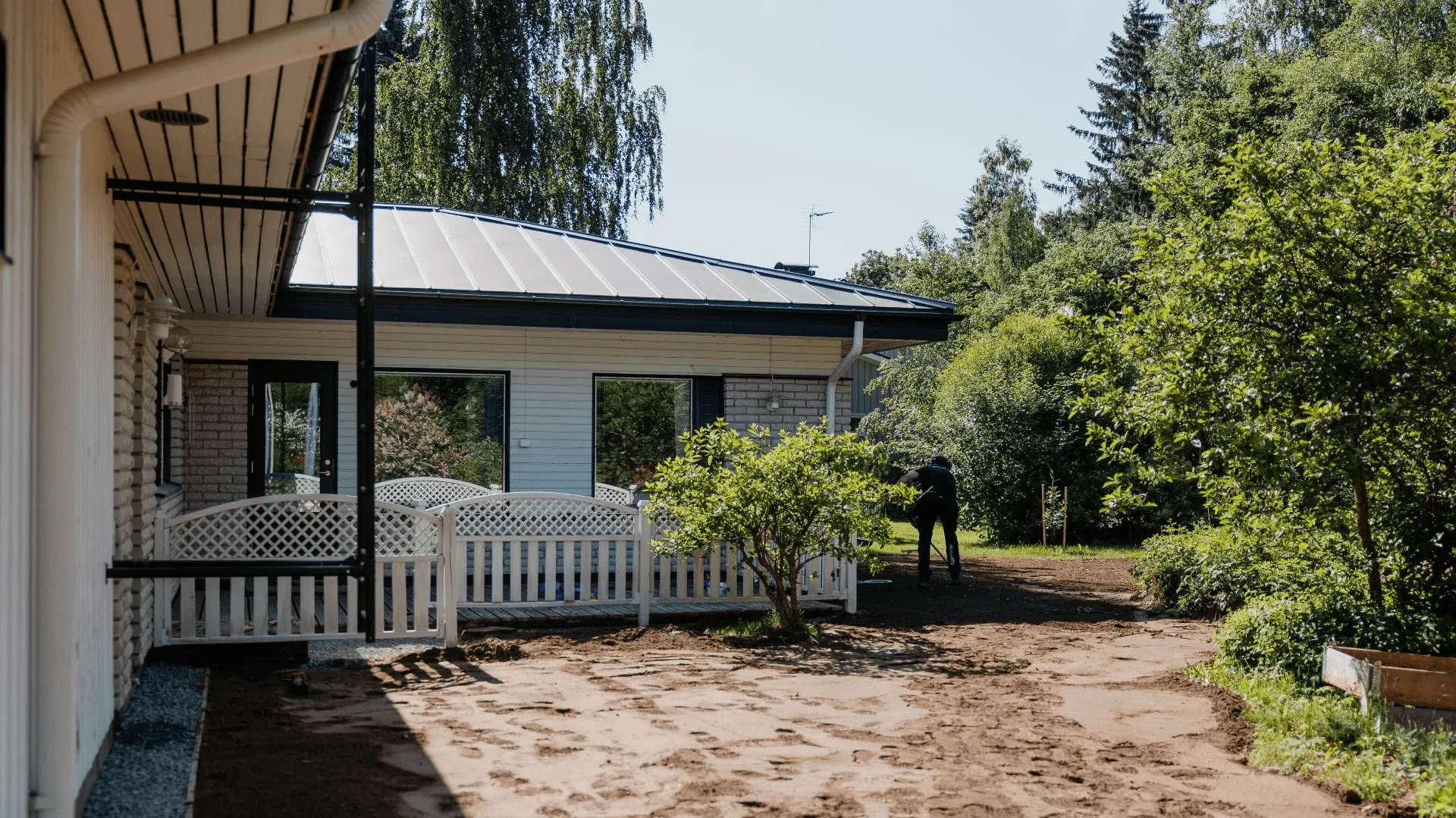
Installing a drainage board on a low plinth requires particular care. First, sufficient soil must be excavated so that there is enough space on the foundation surface for waterproofing, the drainage board, and the top finishing profile. The finishing strip prevents water and debris from entering behind the drainage board and protects the structure.
During installation, it is important that the drainage board extends far enough downward and is firmly fixed to the foundation:
“Drainage boards are fastened to the foundation wall with nails or screws so that they remain securely in place. When installed correctly, the textured surface of the drainage board prevents water from reaching the foundation and directs it toward the drainage pipes.”
Ensure a successful result and avoid mistakes by reading the full article here: Drainage board installation – how to avoid costly mistakes.
What are the most common drainage board installation mistakes?
The most common installation mistake is placing the upper edge of the drainage board too low. In this case, rainwater and splash water can be directed behind the structure, increasing the risk of moisture damage. Incorrect installation height significantly reduces the protective effect of the drainage board.
A drainage board is installed correctly when it extends high enough and its top edge is protected with a finishing strip that prevents water and debris from entering between the board and the foundation wall.
Lähteet
Salaojapiste – Mikä on valesokkeli – 8 yleisimmin mietityttävää kysymystä
Salaojapiste – Salaojan asennusohje – Tee-se-itse-opas
Salaojapiste – Patolevyn asennus – Näin vältät kalliit virheet
Baumerk – Things to Know About Foundation Waterproofing
Resisto – Foundation Waterproofing Below Grade Walls
FineHomeBuilding – Dampproofing and Waterproofing for Foundation Walls