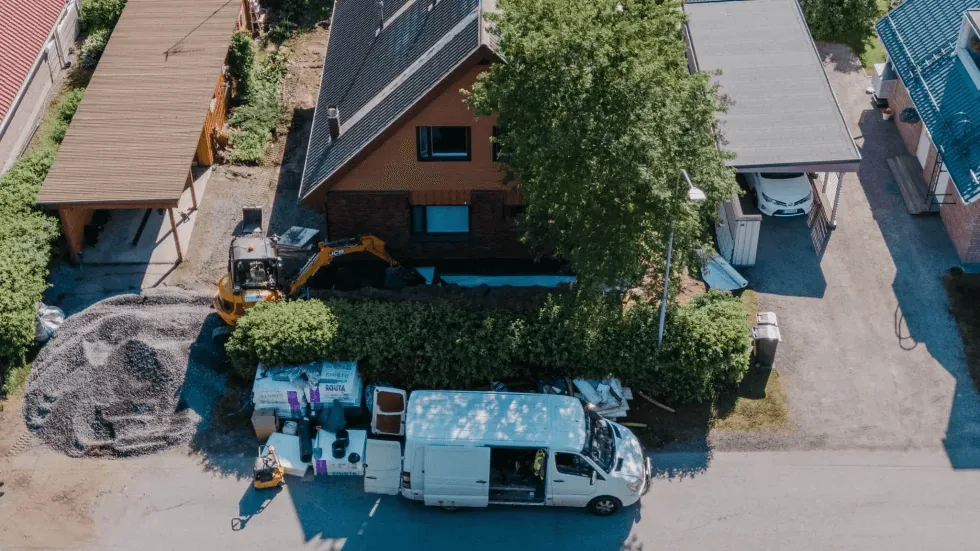
Installing drainage in an old house – when and why is it worth it?
Old house drainage systems – why are they important?
Old houses often have a unique character, but they also come with structural challenges, one of the most significant being moisture control. Many homeowners do not realize how critical a properly functioning drainage system is for both the durability of the building structure and indoor air quality.
Especially in houses built before the 1990s, drainage systems may be insufficient or completely missing, which significantly increases the risk of moisture damage and mold problems.
Key takeaways from the article
Drainage systems are an essential part of maintaining an old house, as they keep foundations dry and protect the building from moisture damage, mold, and frost-related cracking
Insufficient or missing drainage can cause water to accumulate around the foundation and seep into the structure
Drainage systems can be retrofitted or fully installed even in houses built before drainage systems were commonly used
In houses built between the 1950s and 1980s, drainage systems are often incomplete, degraded, or entirely absent
The cost of drainage renovation in an old house is typically around €10,000–€30,000, depending on the size of the building, soil conditions, foundation type, and scope of work
When should drainage systems in old houses be replaced? – 8 key considerations
Drainage systems in old houses do not last forever, and their condition has a direct impact on the building’s moisture performance, indoor air quality, and overall value. Replacement often becomes necessary gradually, and preventing issues is always significantly more cost-effective than repairing damage afterward.
As Craig Tripp writes in his article:
“Sewers should also be checked for clogging. Because they are underground and intentionally ‘out of sight’, it is difficult to know when a drain starts to clog.”
Below are eight key factors to consider when assessing whether a drainage renovation is needed:
Moisture or a musty smell in the basement or subfloor
Recurring moisture issues in the foundation or wall structures
Water accumulating around the building after rainfall
Cracks or deterioration in the foundation wall
Cold and damp floors, especially in ground-contact areas
Estimated lifespan of drainage systems (typically 30–50 years)
Missing or outdated waterproofing on foundation walls
Building age and original construction practices (especially older drainage standards)
If several of these signs are present, drainage replacement is usually timely—or at least a detailed professional inspection is strongly recommended.
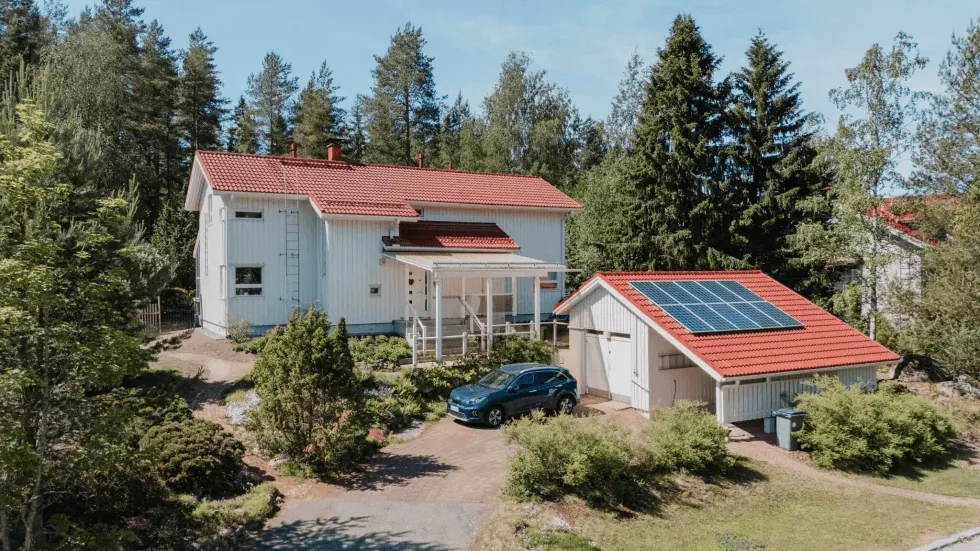
1. Moisture appears in the basement or indoor spaces
If moisture appears in the basement or other indoor areas, it may be a sign that the drainage system is not functioning properly or is missing entirely. Moisture can appear as darkened walls, peeling paint, a musty odor, or even visible mold growth.
2. The foundation or subfloor has a stale, musty smell
The odor is often caused by mold, microbial growth, or soil moisture and can indicate a malfunctioning or insufficient drainage system. If the smell is constant and does not disappear with improved ventilation, it is advisable to inspect the drainage system and consider renovation to control moisture.
3. Cracks, deterioration, or white lines appear on the foundation
Cracks, surface deterioration, or white streaks on the foundation surface may indicate moisture-related damage. When water penetrates the foundation, it weakens the material structure and can cause frost damage, especially during winter. White lines are often salt deposits formed when moisture evaporates from the structure and leaves salts on the surface.
4. Yard slopes direct water toward the building
If the yard grading slopes toward the house, rainwater and meltwater are directed straight to the foundation instead of flowing away. This significantly increases the risk of moisture accumulation around the building’s foundation.
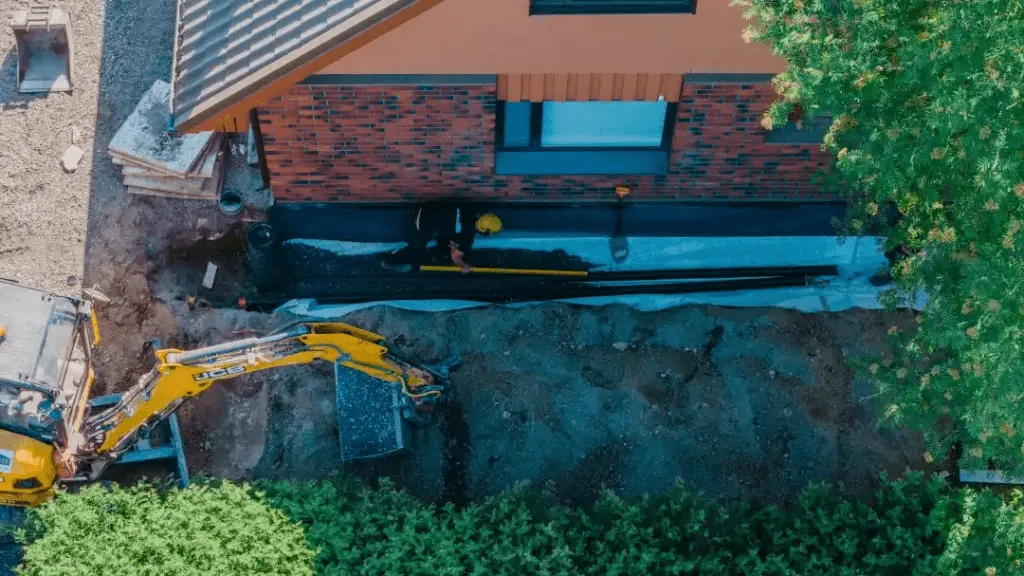
5. Ground level is too high relative to the foundation
If the ground level is too high compared to the foundation, this is often referred to as a “false plinth” situation. In such cases, moisture can more easily transfer into the foundation and structural elements. This significantly increases the risk of moisture-related damage, such as foundation deterioration and mold growth.
6. No water is found in drainage inspection wells, or they are constantly full
If there is no water at all in the drainage inspection wells, or they are constantly full, it indicates a problem in the drainage system. Empty wells may mean that the drainage pipes are clogged, collapsed, or broken, preventing water from reaching the wells. On the other hand, constantly full wells suggest that the system cannot drain water efficiently, which may be caused by blockages or issues with slope and discharge.
7. Rainwater from gutters and downspouts is directed directly to the base of the house
If rainwater from gutters and downspouts is directed straight to the base of the house, a large amount of rain and meltwater ends up right next to the foundation. This puts significant strain on the drainage system and increases the risk of moisture damage, especially if the drainage system is old, clogged, or insufficient. In a properly functioning system, roof water is directed as far away from the house as possible, for example into a stormwater sewer or infiltration area.
8. Drainage system is over 30 years old or has never been installed
If the drainage system is estimated to be over 30 years old or has never been installed, it is strongly recommended to invest in drainage improvements as soon as possible. Old drainage systems may have collapsed, become clogged, or deteriorated, meaning they no longer effectively carry water away from the foundation. In addition, construction methods and materials have improved over time, so older systems may not meet modern standards. If no drainage system has ever been installed, the foundation is continuously exposed to moisture-related damage.
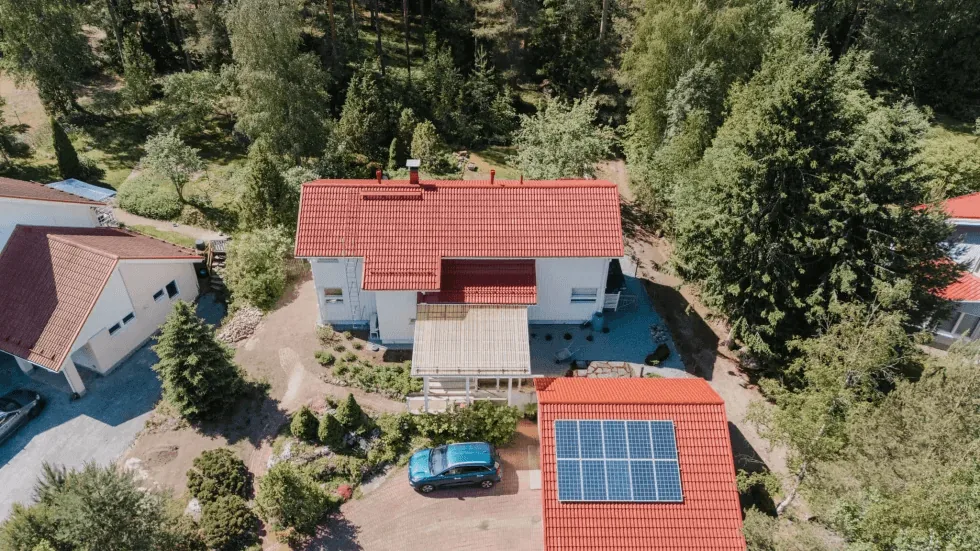
In what age of house is drainage renovation typically done?
A drainage renovation is usually carried out in houses built before the 1990s, as drainage quality and waterproofing solutions were not as advanced back then as they are today. Especially in houses built between the 1950s and 1980s, drainage systems may be insufficient, in poor condition, or completely missing.
If the building has risk structures such as a “false plinth,” drainage renovation may become necessary earlier than usual. As we explain in our article on false plinth structures:
“False plinth construction was widely used in the 1970s and 1980s, as it allowed a cleaner exterior appearance of the house and gave flexibility in adjusting the foundation height according to the terrain. Problems with false plinth structures often arise because the building may be missing foundation drainage boards and drainage systems entirely, allowing moisture to rise and causing rot or mold in the structures.”
What is the cost of installing drainage in an old house?
The cost of installing a drainage system in an old house typically ranges between €10,000–€30,000, depending on factors such as the size of the house, soil conditions, foundation type, and scope of work. Costs are also influenced by additional work such as renewal of stormwater systems and demolition of yard structures.
As stated in our earlier article:
“The cost of a drainage renovation through our service is on average between €14,000–€22,000. The average project cost is around €17,000.”
Drainage installation in an old house easily and effortlessly with Salaojapiste
Drainage installation in an old house can be carried out easily and smoothly with Salaojapiste. Our experienced specialists design the drainage system according to the specific needs of your property and ensure that the installation is done carefully using the correct materials and methods.
Salaojapiste experts provide tailored solutions that meet the needs of your home. We also handle possible upgrades to stormwater systems and final landscaping, ensuring that both the yard and the building’s foundation remain in good condition for years to come.
Trust us with your drainage system and enjoy peace of mind for years ahead. By choosing Salaojapiste, you get a reliable partner who makes the drainage renovation process smooth, safe, and worry-free.